
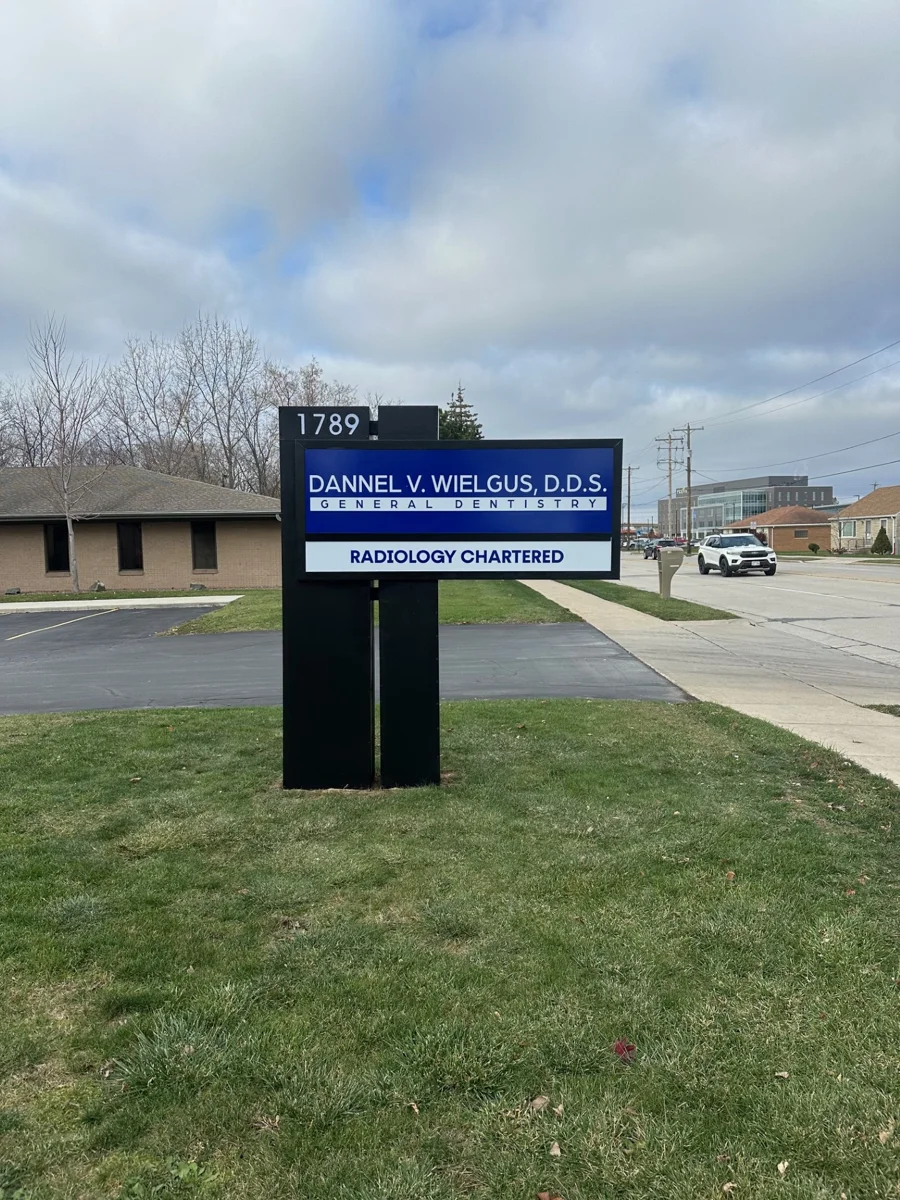
Monument Sign vs. Pylon Sign: Which Fits Your Property?
The monument sign vs. pylon sign question isn't a search for the better format. It's a search for the right fit. This usually depends on where people approach your site, how far away they need to see your sign, how many businesses it must identify, and what the surrounding property allows.
Learn more ↓Tell us about your project.
The monument sign vs. pylon sign question isn't a search for the better format. It's a search for the right fit. This usually depends on where people approach your site, how far away they need to see your sign, how many businesses it must identify, and what the surrounding property allows.
Green Bay-area property owners often compare entrance identity with roadside visibility before choosing between these sign types.
Neither option is automatically better. Understanding the differences between these freestanding sign types can help you narrow your choices before discussing your project with a sign professional.
Monument Signs and Pylon Signs at a Glance
Both monument and pylon signs stand independently of a building. However, monument signs sit closer to ground level and often complement the architecture and landscaping around an entrance. Pylon signs use an elevated display to make business or property identification more noticeable from a distance, depending on the surroundings and viewing angle.
Here is how the two formats compare.

What to consider
Monument sign
Pylon sign
Overall profile
Low-profile, substantial appearance
Elevated, prominent display
Typical placement
Property entrances, office campuses, and landscaped approaches
Road-facing sites, commercial developments, and locations needing greater roadside visibility
Main visibility goal
Identify an entrance or establish a property’s identity
Help approaching drivers recognize a business or development
Tenant identification
Can accommodate a property name and selected tenant information
Can accommodate multiple tenant panels, depending on the design
Architectural role
Can complement landscaping and surrounding buildings
Creates a more prominent roadside identification point
Digital messaging
Depends on the design and intended display
May accommodate an electronic message center when suitable
Key planning consideration
Entrance sightlines, landscaping, and architectural fit
Road approach, obstructions, sightlines, and display requirements
How Monument Signs Work
Monument signs are ground-level structures, usually with a solid base and a wide, low sign face. They read as part of the architecture rather than an independent marker.
Ground-Level Entrance Identification
Monument signs can suit entrance identification, complement landscaping, and provide a lower-profile architectural look. Final placement should account for sightlines and property restrictions.
This format may suit an office campus set back from the road, medical offices, educational facilities, residential developments, and commercial properties where a consistent visual identity matters.
Covenant Signs & Graphics provides monument signs for businesses and properties that need a freestanding identification solution. The idea is to balance appearance with practical identification.
Single-Tenant vs. Multi-Tenant Layouts
A monument sign can also present the name of a commercial property alongside selected tenant information, provided the layout accommodates the required content.
For a single-tenant property, the design may prioritize one business name, logo, or property identity. For a multi-tenant property, the owner must decide whether the sign should emphasize the development's name, individual businesses, or both.
Readability is the main consideration here. If the lettering becomes difficult to distinguish or the hierarchy is unclear, visitors may struggle to find the information they need.
So, before choosing between single-tenant and multi-tenant layouts, consider the number of tenants, how their names should be organized, and whether the directory is likely to change. These decisions can help determine whether a lower-profile format is practical for the property.
How Pylon and Pole Signs Work
Elevated pylon signs may support roadside identification where nearby structures or landscaping obstruct lower signs. Their suitability depends on the site, visibility, and permitted height.
Pylon and pole signs can differ in support structure and appearance. Compare the actual construction options for your site rather than assuming one format is universally preferable.
Multi-tenant pylons may include separate tenant panels. Plan their size, readability, and changeability according to the property and viewing conditions.
Lighting and electronic displays can affect the final configuration, subject to site conditions and local requirements.
Explore our pylon and pole signs to understand the available options for elevated commercial identification.
Which Format Fits Your Property?
Compare monument and pylon signs based on actual property approaches, available space, visibility, and approval requirements.
Scenario 1: An Office Campus With a Defined Entrance
A monument sign may suit a well-defined entrance when lower-profile identification fits the property and remains visible from relevant approaches.
Scenario 2: A Shopping Center With Several Tenants
Drivers need to recognize the development, while tenants want their names to be visible. In this case, a pylon sign may be worth considering if the main challenge is roadside identification and the property needs a structured arrangement of tenant panels. Its elevated display can help present information to approaching traffic.
However, a monument sign may still work if the site has a suitable entrance, the viewing conditions are favorable, and the number of names can be accommodated without affecting readability.
Scenario 3: A Business Set Back From a Busy Road
A pylon sign may be the better option because its elevated position can improve the opportunity for drivers to see the property identification. However, greater height alone does not guarantee visibility. The sign must be positioned with the actual road approach and surrounding obstructions in mind. Also, confirm the applicable site and approval requirements before finalizing a design.
Scenario 4: A Property With a Strong Architectural Identity
A monument sign may be the better option if the owner wants the entrance sign to feel like an extension of the property rather than a separate roadside advertising feature. If the property also needs identification from a distant road, evaluate whether a single sign can meet both objectives or whether other exterior signage should support the entrance identification.
Lighting, Digital Messages and Property Requirements
When choosing between outdoor sign options, owners should also consider what information the sign needs to communicate and whether it must remain easy to read after dark.
• A fixed identification sign may be sufficient when the main purpose is to display a property name or business identity.
• Illumination becomes important when visibility during evening hours is important.
• An electronic message center may be useful when a property needs to display changing information. Pylon configurations can accommodate digital displays in suitable designs, while other sign formats may also support different lighting or messaging options.
Property owners should also consider:
• Structural and electrical access: Evaluate the proposed configuration, foundation, electrical needs, and installation conditions for the site.
• Property restrictions: Landlord criteria, lease provisions, development guidelines, and other applicable requirements may affect the permitted design.
• Local sign review: Requirements can vary by location and property. Confirm the applicable rules and approval process before committing to a final design.
• Long-term maintenance: Consider the sign’s accessibility for routine care, panel updates, lighting service, or future tenant changes.
Questions to Answer Before Requesting a Quote
Before requesting a quote, prepare the following:
• Property address
• Site photographs: Include the entrance, nearby road, existing signage, and any structures or landscaping that could affect visibility.
• Road approaches: Explain the directions from which drivers or visitors are likely to approach.
• Intended viewing distance: Describe where people should be able to recognize the sign.
• Tenant information: List the business names, logos, or directory details that need to appear on the sign.
• Primary sign goal: Clarify whether you want entrance identification, roadside visibility, multi-tenant identification, or a combination of these objectives.
• Approximate available area: Share any known space constraints or preferred placement.
• Lighting and digital messaging: Indicate whether illumination, changing messages, or other display features are required.
• Property and approval requirements: Share any known landlord guidelines, site restrictions, or review requirements.
You do not need to have every design decision finalized before speaking with a sign professional. The consultation helps evaluate the site, clarify your priorities, and identify which options need further consideration.
FAQs
Which is easier to notice from a main road?
Generally, elevation helps identify a sign at higher speeds and longer distances, which is why pylon signs are common along busy corridors. But distance, obstruction, and approach angle all affect visibility.
Can a monument sign serve several tenants?
Yes, often in a directory layout. The practical limit is how many names, how long they are, and how much width the site allows.
Can a pylon include digital messages?
Pylon signs can be built with EMC integration. It requires planning for power, access, and local review of the digital display.
What affects installation complexity?
Site access, existing utilities, soil and foundation conditions, electrical availability, and structural size all play a part in finalizing the installation process.
Is either style always less expensive?
No. Cost depends on size, materials, illumination, structure, electrical work, and site conditions. The two styles cannot be fairly compared without those specifics.
How do local sign rules affect the choice?
Size, height, setback, and illumination limits may effectively decide the format for you. Check with your local authority early, before design work moves forward.
Discuss a Freestanding Sign for Your Property
Monument signs generally emphasize entrance-level identity; pylons support elevated roadside identification. Compare sightlines, tenant needs, structural scope, and local rules.
A site-specific consultation can help you evaluate these factors and determine which format makes sense for your location. Covenant Signs & Graphics works with commercial properties and businesses in the Green Bay area on exterior signage needs.
Request a custom quote to discuss a monument or pylon sign for your property.